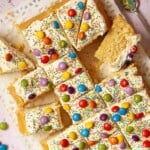
Vanilla Tray Bake
Vanilla tray bake with vanilla buttercream is soft & fluffy, feeds plenty and is sure to delight everybody. This easy & quick sponge tray bake can be decorated to suit any occasion, making it the perfect crowd-pleasing celebration cake.
Servings: 16
Calories: 428kcal
Equipment
- 1 x rectangular tray bake tin measuring approximately 30cm long, 20cm wide and 5cm deep
Ingredients
For the cake
- 250 g Baking margarine or butter, room temperature
- 250 g Caster sugar
- 4 Eggs Large, free-range, room temperature
- 4 teaspoons Vanilla extract
- 4 tablespoons Milk room temperature
- 250 g Plain flour all-purpose
- 3 teaspoons Baking powder
For the buttercream and decoration
- 180 g Butter room temperature
- 360 g Icing sugar
- 4 teaspoons Vanilla extract or vanilla bean paste
- 2 tablespoons Double cream or milk
- Decorations of choice such as sprinkles, flaked chocolate etc
Instructions
- Preheat the oven to 180℃/ 350℉
- Grease a 30cm x 20cm x 5cm baking tin and line the base and sides with baking paper. If using a cake band soak it in water and wrap it around the side of the tin.
- Use electric beaters to cream the butter and sugar together for about 3 minutes until they are pale and fluffy.
- Add the eggs, one at a time, beating well before adding the next one. Don't worry if the mixture splits, the cake will still cook nicely.
- Beat in the vanilla extract.
- Mix together the flour and baking powder.
- Sieve half of the flour into the bowl and briefly mix it in.
- Mix the milk in.
- Sieve the remaining flour into the bowl and mix it in until just combined. Be careful not to overmix the batter as the cake will end up tough.
- Spoon the cake batter into the prepared baking tin and bake for 30 minutes until the cake has risen, looks golden and no cake batter remains when a cocktail stick is poked into the centre of the cake. If raw batter is evident on the skewer, bake the cake for a few more minutes and retest.
- Leave the cake in the tin to cool completely, then carefully unmould it and remove the baking parchment.
- To make the buttercream use electric beaters to cream together the butter, vanilla extract and half of the icing sugar (sieved) until smooth and fluffy.
- Sieve the remaining icing sugar into the bowl and beat again.
- Beat in the double cream (or milk).
- Optional: remove air bubbles by pressing the icing against the side of the bowl using a large metal spoon.
- Spread the buttercream over the top of the cake and top it with sprinkles or other decorations of your choice.
- Cut the cake into squares, slices or triangular segments just before serving.
Video
Notes
- Digital kitchen scales and gram measurements are the best options when baking. It’s the most accurate method of measuring out ingredients (so much more accurate than cups), ensuring better baking results for you.
- Room-temperature ingredients make creaming the butter and sugar easier and they help the cake batter rise evenly.
- Mix the flour into the batter until no streaks of flour remain and no more. Overmixed batter will result in a tough sponge.
- The bake time is a guide only since all ovens vary. Your cake may take slightly less or slightly more time to cook than suggested in the recipe card. Test it by poking a skewer into the centre of the cake. If it comes out with raw batter on it then the cake needs a little longer in the oven. If it comes out clean, then the cake is sufficiently baked.
- Wait until the cake is completely cold before spreading the buttercream on the top, otherwise, the buttercream will melt.
- Always use the correct tin size. Trying to fit too much batter into a smaller tin will lead to it overflowing during the baking.
- To make a smaller version use half of the ingredients listed and bake the cake in a tin approximately 15cm-20cm square. Cook for around 20 minutes and test for doneness.
Nutrition
Calories: 428kcal | Carbohydrates: 51g | Protein: 3g | Fat: 24g | Saturated Fat: 9g | Polyunsaturated Fat: 4g | Monounsaturated Fat: 9g | Trans Fat: 0.4g | Cholesterol: 68mg | Sodium: 239mg | Potassium: 71mg | Fiber: 0.4g | Sugar: 38g | Vitamin A: 933IU | Vitamin C: 0.04mg | Calcium: 30mg | Iron: 1mg
